AI it’s a new way to build software and LLMs are rewriting the rules of development. To truly harness their power, you need to rethink how people interact with them.
Your users don't trust AI yet, and they have a point.
AI models are remarkable. They learn everything, respond in seconds, and automate complex processes. But they also have structural limitations: hallucinations, poor planning, inconsistent outputs. The problem isn’t AI itself, it’s that users either trust it blindly or don’t use it at all. The real design challenge today is building systems where trust is earned gradually, delegating to the agent only what’s safe to delegate, while keeping humans in control where it matters.
Progressive delegation is the new design paradigm.
That’s a slider: on one end, full human control. On the other, full agent autonomy. The future isn’t at either extreme, it lives in between and shifts based on context.
Repetitive, low-risk tasks? Let the agent run.
Critical or ambiguous decisions? Keep the human in the loop.
This approach is the core design principle behind all our research on how to build interfaces for agentic systems.
New agents, new interfaces. Here's what's emerging.
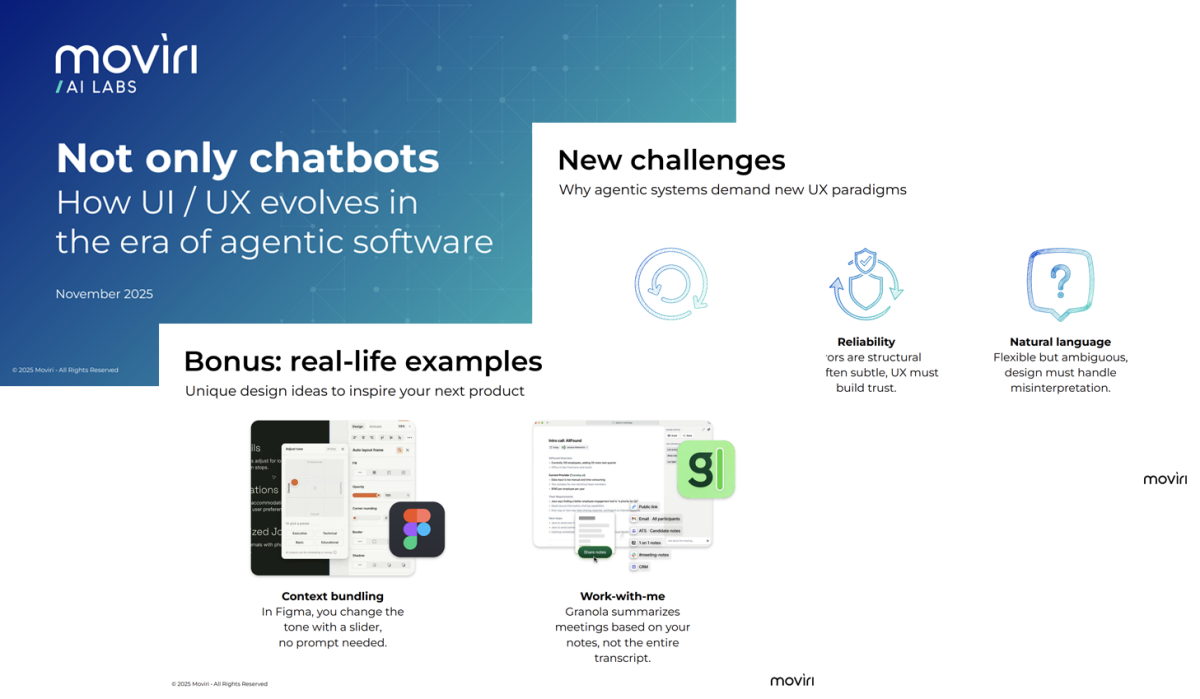
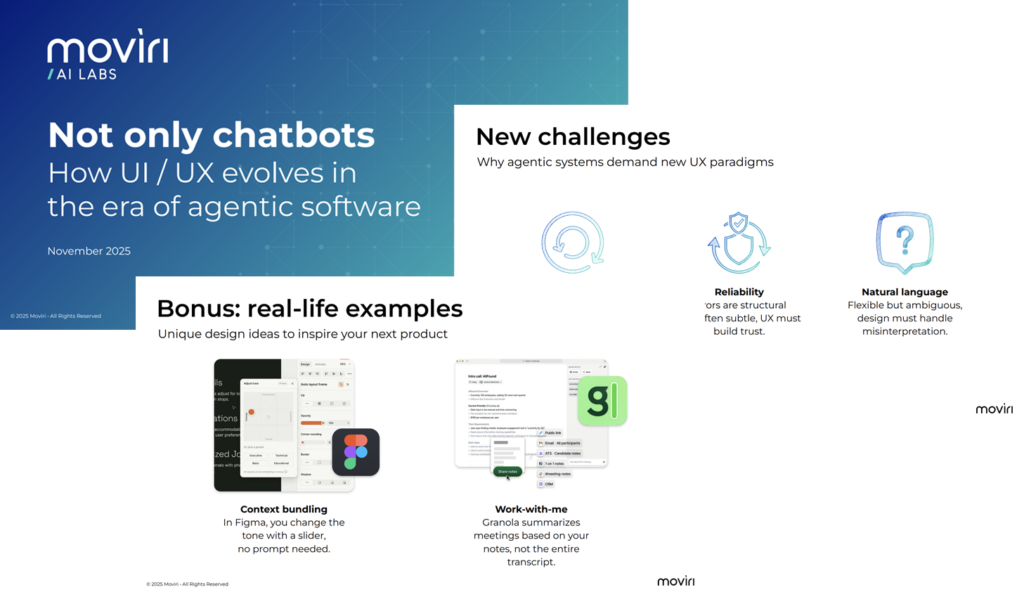
Traditional interfaces can’t keep up with AI agents. Tasks take minutes or hours, natural language is ambiguous, and errors are often subtle, new patterns are needed. We’ve identified four that are already changing how companies build products:
Evolved Chat UX
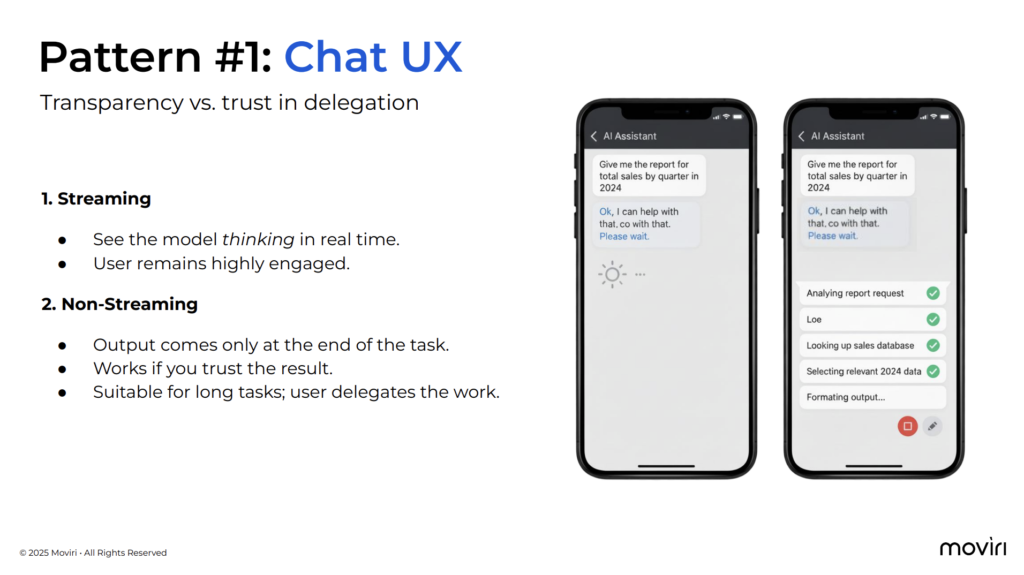
Not just a text window. Streaming mode shows the agent “thinking” in real time. Non-streaming delivers the result only when the task is complete: ideal for longer tasks where users want to delegate without following every step.
Ambient agents
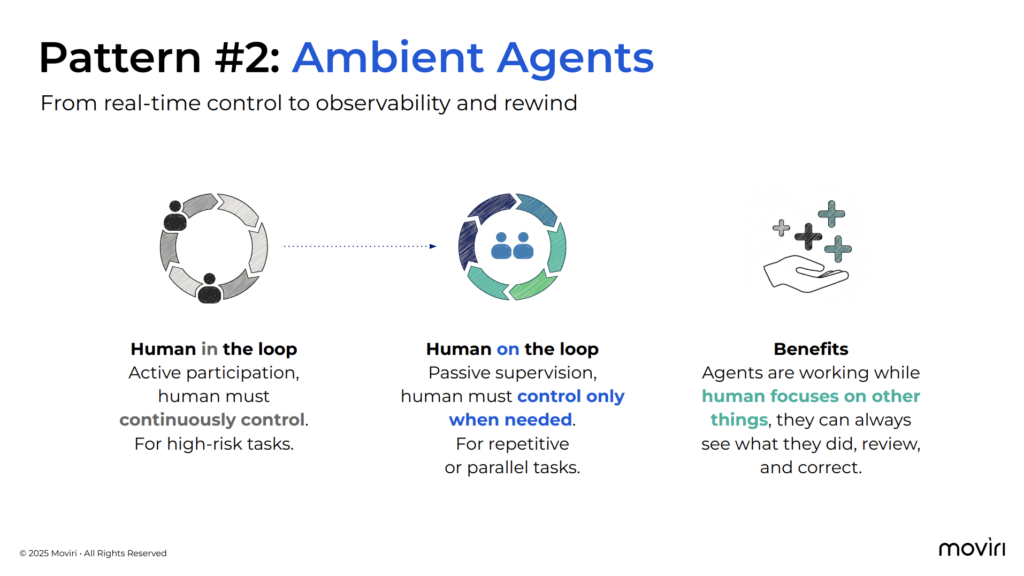
Users no longer need to actively monitor every operation. The agent works in the background; the human supervises and steps in only when needed. Think of it as an assistant that acts and then reports back.
Handshakes
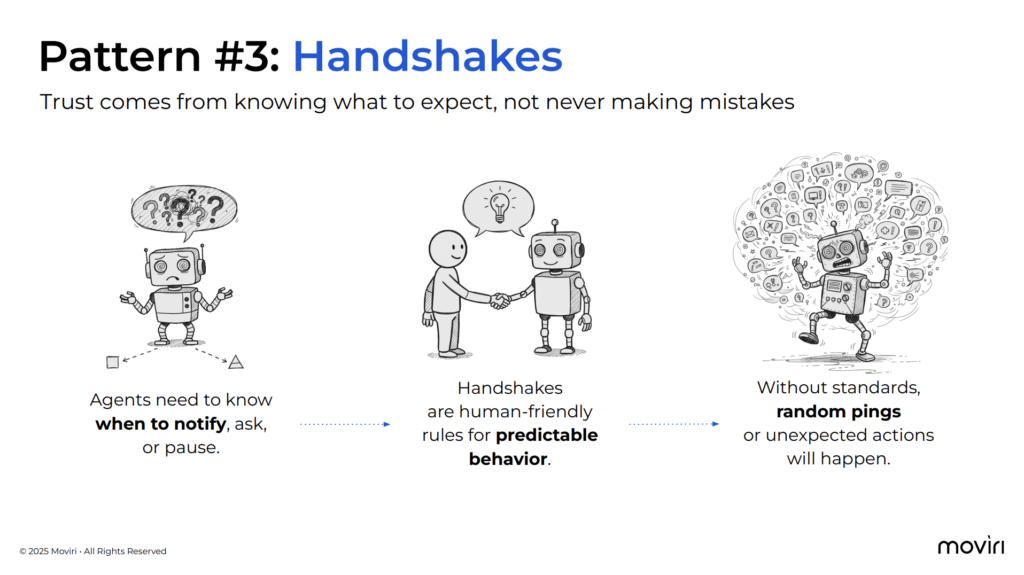
Shared rules that define when an agent notifies, asks for confirmation, or pauses to wait. Without standards, agents become chaotic and unpredictable. With handshakes, every interaction is expected and understandable.
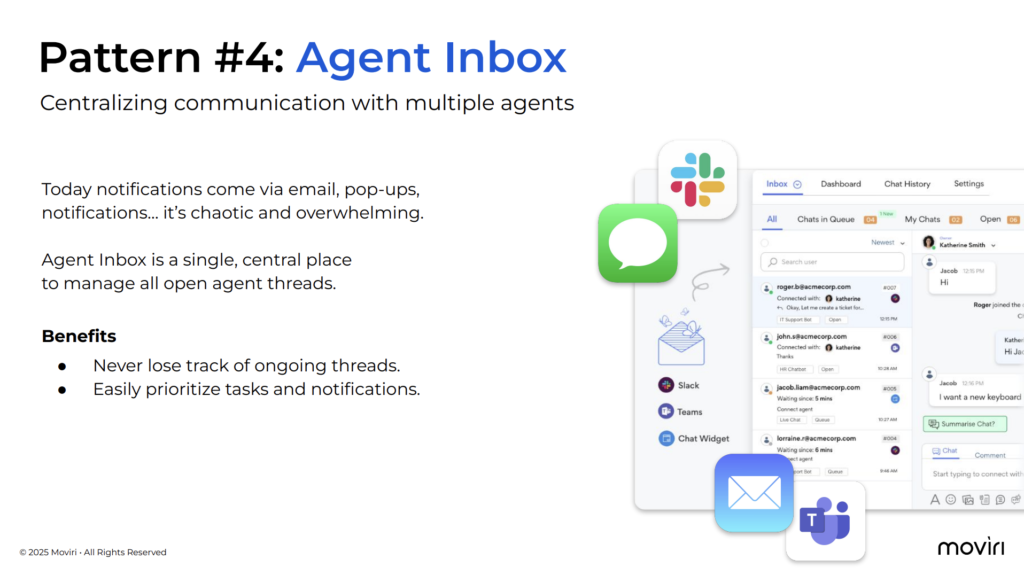
Agent inbox
A single control center for managing all open agent threads. No more notifications scattered across emails, pop-ups, and apps. Everything in one place, prioritized and clear.
Download the free PDF and see what’s next for AI interfaces